
Seasonal Patterns in UK Handicap Racing: When the Flat, Jumps and Festivals Create Value
 Available in US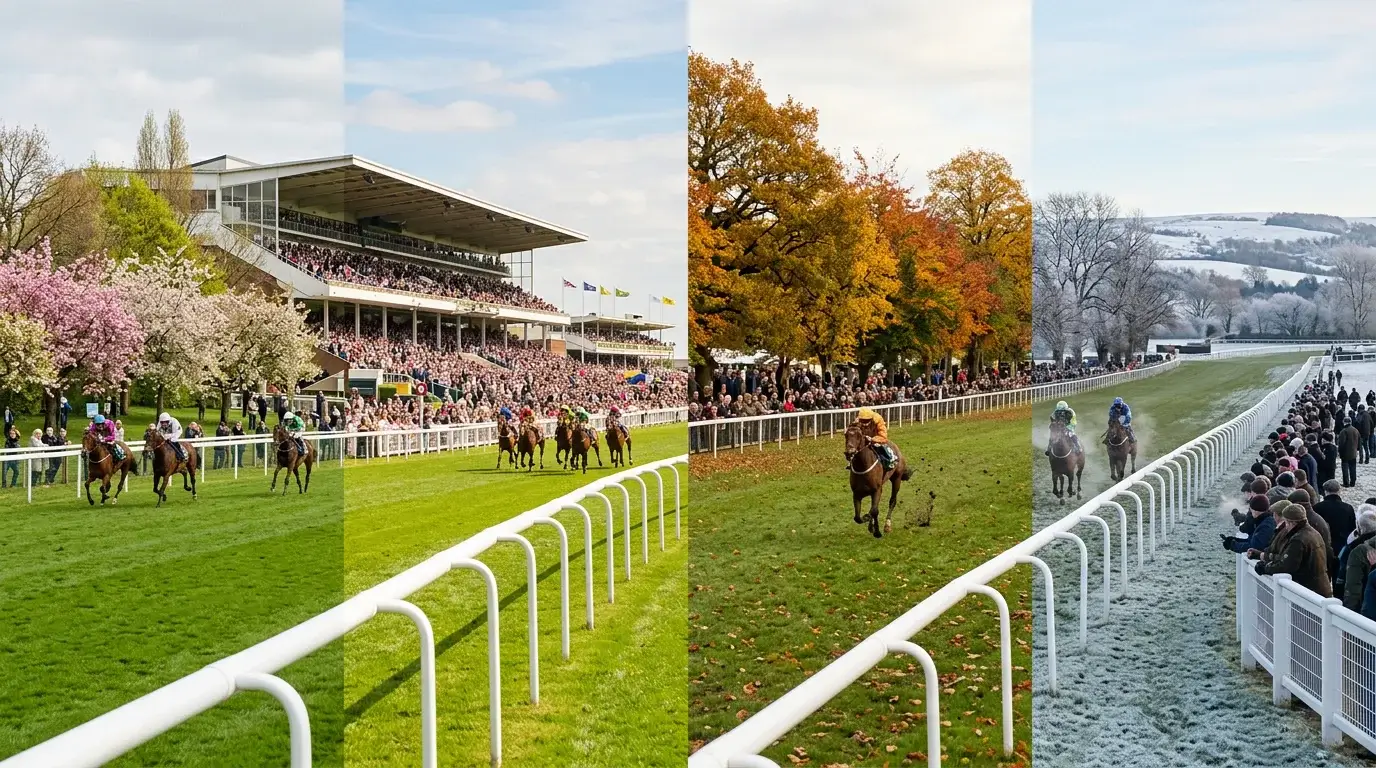
April Turf Openers to March Festival Finals — the Annual Rhythm of UK Handicap Betting
Seasonal patterns UK horse racing handicap bettors can exploit are baked into the structure of the sport itself. British racing operates on a calendar that repeats annually with remarkable consistency: the Flat turf season opens in late March or early April, peaks through summer and fades in November; the National Hunt season runs from October through late April, building to its climax at Cheltenham and Aintree in March and April. All-weather Flat racing fills the gaps year-round. Each phase brings different competitive dynamics, different information flows and different opportunities for the handicap punter who plans ahead. Racing has seasons — and so should your strategy.
The seasonal pattern is not just anecdotal — it is measurable. UK Gambling Commission survey data shows that horse racing participation among British adults jumped from 4% in the January-to-April 2025 period to 7% in April-to-July, a three-percentage-point increase that maps directly onto the opening of the turf Flat season and the spring festival calendar. Public interest — and the money that follows it — flows into racing on a predictable seasonal cycle. The punter who aligns their activity with that cycle is not following the crowd; they are positioning themselves where the markets are deepest, the fields are largest and the analytical opportunities most abundant.
The Flat Calendar: Key Months, Heritage Handicaps and All-Weather Fill-Ins
The turf Flat season splits into three strategic phases. The opening phase — late March to mid-May — features horses returning from their winter breaks, often on marks set by performances from the previous autumn. The form is stale, the market is uncertain, and the punter who has tracked the winter training reports and monitored stable activity holds an informational advantage. The Lincoln Handicap at Doncaster traditionally opens proceedings, and its result often sets the narrative for the early weeks of the season.
The peak phase — June to September — is the heartland of Flat handicap betting. Royal Ascot, Glorious Goodwood, the Ebor meeting at York and the autumn programme at Newmarket feature heritage handicaps with maximum fields, six-figure prize funds and the season’s deepest betting markets. Total UK racing prize money reached £153 million in 2025, with the Flat accounting for an additional £3 million over the previous year — and a disproportionate share of that money flows into the summer handicaps that attract the strongest fields. This is the phase where analytical edge is most readily converted into profit, because the form is fresh, the fields are large and the market liquidity supports meaningful stakes.
The closing phase — October to early November — brings the autumn handicaps: the Cambridgeshire and Cesarewitch at Newmarket, the big-field handicaps at Ascot’s Champions Day. The turf surface is often softer than in summer, which reshuffles the competitive order and can produce results that the summer form did not predict. Punters who track going preferences across the season gain an advantage in the autumn, when the ground shifts beneath the market’s feet.
All-weather racing provides continuity through the winter. The surfaces are consistent, the form is reliable, and specialists emerge who thrive on polytrack or tapeta but cannot reproduce their form on turf. The all-weather winter is a quieter, lower-profile operation, but for punters willing to build expertise in a less crowded space, it offers steady opportunities that the mainstream racing media largely ignores.
The Jumps Calendar: October Starts, Christmas Festivals, Spring Climax
The National Hunt season follows its own rhythm. October marks the start, with the first meaningful fixtures at Chepstow, Wetherby and Cheltenham providing early-season form that is cautiously interpreted — many horses are returning from summer grass and are racing below their peak fitness. For handicap bettors, the autumn is a time for information gathering rather than aggressive staking. The marks horses carry are based on the previous season, and the gap between those marks and current ability is at its widest and most uncertain.
The Christmas and New Year period sharpens the picture. Kempton’s King George meeting, Leopardstown’s festivals and a packed card across Boxing Day and New Year provide a burst of high-quality form that updates the handicapper’s assessments and reveals which horses have trained on, which have regressed and which have been laid out for a specific spring target. The form generated over Christmas is often the most reliable foundation for Cheltenham Festival analysis two months later.
The spring climax — Cheltenham in March, Aintree in April, Punchestown in late April — is where the jumps season delivers its highest-profile handicaps. These are the races that trainers plan backwards from, placing horses in earlier handicaps to manipulate ratings, build fitness and secure qualifying runs. The handicap punter who has tracked campaigns from October through to March — noting where horses have run, how hard they were ridden, and what the connections chose not to enter — holds a compound informational advantage that no single piece of form can provide.
Seasonal Betting Edges: When Value Emerges and When to Stand Aside
Seasonal Patterns in UK Handicap Racing — More on this topic at horse betting handicapping.
See also History of Handicapping in Horse Racing.
Value in handicap betting is not evenly distributed across the calendar. It concentrates in specific windows where the information asymmetry between the informed punter and the market is greatest.
The start of the turf Flat season is one such window. Horses returning on stale marks after a winter break can be significantly ahead of or behind the handicapper depending on how they have developed. The market has limited data to price these runners, and the punter who has done off-season homework — tracking trainer interviews, stable tours, gallop reports — has an edge that evaporates within a few weeks as the form accumulates.
The weeks immediately after a major festival represent the opposite: a period to stand aside. Post-Cheltenham, post-Ascot, post-Goodwood, the form from the festival is being heavily analysed by every punter in the market, the handicapper is actively adjusting ratings to reflect festival performances, and the prices at the next meeting are sharply efficient because the information is fresh and widely known. Betting into a market that has just absorbed a week of intensive form is like buying a stock the morning after an earnings call — the price already reflects the news.
The late autumn — November on the Flat, early December over jumps — is another value window. Public attention fades after the summer and before Christmas, the fields thin, and the market becomes less efficient because fewer eyes are on the card. For punters who remain active during these quieter weeks, the reduced competition for analytical insight can create pockets of value that would not survive a Saturday in July. Racing has seasons — and so should your strategy: push hardest when the calendar favours you, and protect the bankroll when it does not.
